
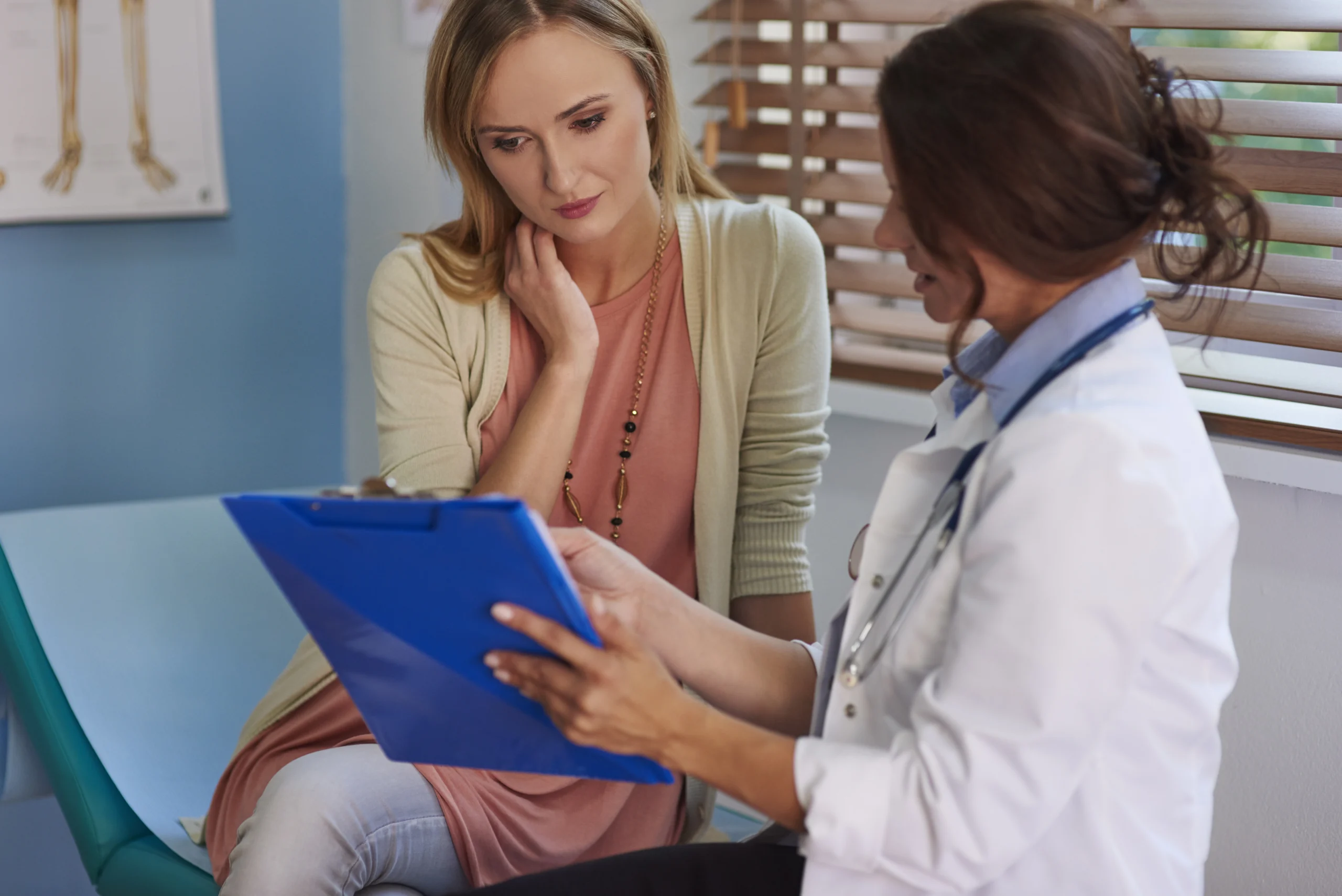
Many people assume they would know if they had a sexually transmitted infection. In reality, the opposite is often true. According to the World Health Organization, more than one million curable STIs are acquired every day worldwide among people aged 15–49, and the majority cause no symptoms at all.
That silence is exactly what makes STIs a health concern worth understanding. Left untreated, some can affect your fertility, your pregnancy, and your long-term reproductive health. The good news: most are easy to detect and many are fully curable.
Some infections may not show up immediately after exposure, so your doctor may advise repeat testing depending on timing. Always tell your doctor about recent exposure so the right tests are chosen.
For cervical screening, see your gynaecologist about a Pap smear or HPV test as part of Routine Check-ups & Prevention.
What Is an STI?
An STI (sexually transmitted infection) is an infection passed from one person to another through sexual contact, including vaginal, anal, and oral sex. Some can also pass from mother to baby during pregnancy, childbirth, or breastfeeding. You will often hear the term STD (sexually transmitted disease) used interchangeably. Technically, an STI is the infection itself, whether or not it causes symptoms, while STD refers to when it develops into disease. For everyday purposes, they mean the same thing. STIs are caused by bacteria, viruses, or parasites. That distinction matters because it decides whether an infection can be cured or only managed.Common Types of STIs
Bacterial STIs (curable with antibiotics)
- Chlamydia — very common and often silent
- Gonorrhoea — can affect the cervix, urethra, throat, and rectum
- Syphilis — progresses in stages; painless sores are often the first sign
Viral STIs (manageable, not always curable)
- HPV (human papillomavirus) — the leading cause of cervical cancer; a vaccine is available
- Genital herpes (HSV) — causes recurrent blisters or sores, though many people have very mild or no symptoms
- HIV — managed effectively with modern treatment
- Hepatitis B — preventable with vaccination
Parasitic STIs
- Trichomoniasis — curable with medication; a common cause of unusual discharge
- Pubic lice and scabies — spread through close physical contact
STI Symptoms in Women
Here's the challenge: because of female anatomy, symptoms are often mild, vague, or invisible. Many infections go unnoticed for months or even years. When symptoms do appear, they may include:- Unusual vaginal discharge (change in colour, smell, or amount)
- Burning or pain during urination
- Pain during sex
- Bleeding between periods or after sex
- Lower abdominal or pelvic pain
- Sores, blisters, bumps, or warts on the genitals
- Itching or irritation in the genital area
- Fever or swollen glands (particularly in syphilis or herpes)
Why Untreated STIs Matter
Most STIs respond well to early treatment. Left alone, however, some can lead to:- Pelvic inflammatory disease (PID) — infection spreading to the uterus and fallopian tubes, causing chronic pelvic pain
- Infertility — scarring or blockage of the fallopian tubes
- Ectopic pregnancy — linked to tubal damage
- Pregnancy complications — some infections can pass to the baby, which is why screening during antenatal care is so important
- Increased cancer risk — persistent high-risk HPV is the main driver of cervical cancer
How Are STIs Tested?
Testing is usually simple, quick, and confidential. The tests you need depend on your history, symptoms, and risk factors.|
Test |
Sample | Screens For |
| NAAT (nucleic acid test) | Urine or vaginal/cervical swab |
Chlamydia, gonorrhoea, trichomoniasis |
|
Blood test |
Blood sample | HIV, syphilis, hepatitis B and C |
| Syphilis screening (RPR/VDRL), confirmed with TPHA | Blood sample |
Syphilis |
|
Swab of a sore or lesion |
Swab | Herpes |
| Pap smear / HPV test | Cervical cells |
HPV-related cell changes and high-risk HPV |
Who Should Get Tested?
Consider testing if you:- Are sexually active with a new partner or more than one partner
- Have had unprotected sex
- Have symptoms like discharge, pain, sores, or bleeding after sex
- Have a partner who has been diagnosed with an STI
- Are planning a pregnancy or are already pregnant
- Simply haven't been screened before
Treatment and Prevention
Treatment: Bacterial and parasitic STIs are treated with antibiotics or antiparasitic medication, usually effectively. Viral STIs such as herpes, HPV, HIV, and hepatitis B can be managed with treatment that reduces symptoms and transmission, even though they may not be completely cured. Partners should be informed and treated where needed to prevent reinfection. Prevention:- Use condoms consistently and correctly
- Get vaccinated against HPV and hepatitis B
- Get tested regularly and talk openly with partners about testing
- Seek treatment early and avoid sex until treatment is complete
Confidential STI Care in Goregaon, Mumbai
Asking about STIs can feel awkward, but a good gynaecologist has heard it all and will never judge you. Early testing is quick, and in most cases treatment is straightforward. At Care For Her in Goregaon East, Dr. Anuja Ojha offers private, non-judgemental consultations, screening guidance, and personalised treatment. Book a confidential consultation with Dr. Anuja Ojha, Gynaecologist in Goregaon East →Frequently Asked Questions (FAQs)
Q1. What is the difference between an STI and an STD?
An STI is the infection, whether or not it causes symptoms; an STD is when it develops into disease. In everyday use, the terms mean the same thing.Q2. Can you have an STI without symptoms?
Yes, very commonly. Most STIs, including chlamydia and HPV, can be completely silent, so testing is the only reliable way to know.Q3. What are the common STI symptoms in women?
Unusual discharge, burning during urination, pelvic pain, pain during sex, bleeding between periods, and genital sores or warts. Many women have mild symptoms or none.Q4. Which STIs are curable?
Bacterial and parasitic STIs like chlamydia, gonorrhoea, syphilis, and trichomoniasis are curable. Viral STIs like herpes, HPV, HIV, and hepatitis B can be managed but not always eliminated.Q5. How is an STI test done?
Usually with a urine sample, a vaginal swab, or a blood test, depending on the infection. The process is quick and confidential.Q6. Can STIs affect fertility and pregnancy?
Yes. Untreated infections can cause pelvic inflammatory disease, tubal damage, and pregnancy complications. Early treatment greatly reduces these risks.Q7. How often should I get tested for STIs?
It depends on your risk. Those with new or multiple partners are generally advised to test at least annually, and sooner after any unprotected exposure or symptoms.Citations & References
- World Health Organization. Sexually Transmitted Infections (STIs): Fact Sheet. Updated September 2025. who.int
- Metropolis Healthcare. Types of Sexually Transmitted Diseases: A Complete Guide. Updated May 2026. metropolisindia.com
- Metropolis Healthcare. STD Symptoms in Women: What You Should Know. Updated May 2026. metropolisindia.com
- Verma S, et al. Syphilis screening and trends at designated STI/RTI clinics in Meghalaya, India. International Journal of Community Medicine and Public Health. 2026;13(1):311–318. ijcmph.com
- PolicyBazaar. What are Sexually Transmitted Diseases (STDs)? policybazaar.com
- Careers360. Sexually Transmitted Diseases (STDs): Types, Symptoms, Treatment. Updated July 2025. careers360.com
- World Health Organization. Guidelines for the Management of Asymptomatic Sexually Transmitted Infections. July 2025. who.int