
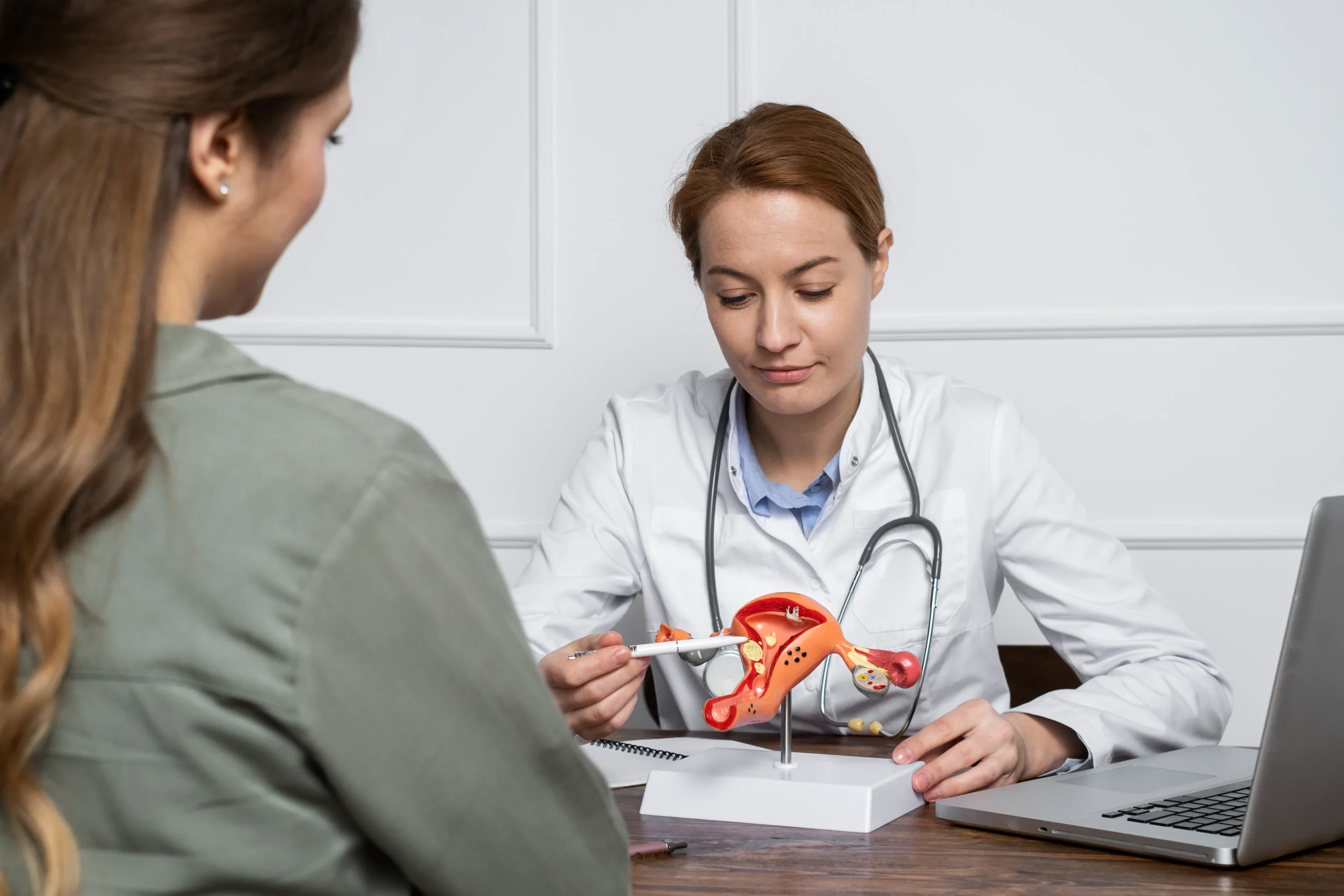
If your periods have become heavier than they used to be, you feel a constant dull pressure in your lower abdomen, or you've been told something "showed up" on your ultrasound — uterine fibroids may be the answer. They are the most common non-cancerous growth in women of reproductive age, affecting an estimated 20–80% of women by the age of 50. In India, fibroids account for a significant proportion of gynaecological referrals, particularly in women between 30 and 50.
And yet, despite how common they are, fibroids remain widely misunderstood — and far too often, symptoms are dismissed as "just bad periods" for months or even years before a diagnosis is made.
Here's a clear, complete guide to understanding uterine fibroids — what they are, why they develop, and what your treatment options actually look like in 2026.
What Are Uterine Fibroids?
Uterine fibroids — clinically known as leiomyomas or myomas — are solid, non-cancerous growths made of smooth muscle and fibrous tissue that develop in or on the walls of the uterus. They can range in size from a small seed to, in rare cases, as large as a grapefruit. A woman can have one fibroid or several at a time. Critically: fibroids are almost never cancerous. The risk of a fibroid becoming malignant (a condition called leiomyosarcoma) is less than 1 in 1,000. This is important context — a fibroid diagnosis is not a cancer diagnosis.Types of Uterine Fibroids
The location of a fibroid within or around the uterus determines its type — and largely determines what symptoms it causes:- Intramural fibroids — the most common type; grow within the muscular wall of the uterus. Can cause heavy bleeding and pelvic pressure as they enlarge.
- Submucosal fibroids — grow just beneath the inner lining of the uterus (endometrium). Even small submucosal fibroids can cause heavy bleeding and are most likely to affect fertility.
- Subserosal fibroids — develop on the outer surface of the uterus; tend to cause pelvic pressure, back pain, and urinary symptoms rather than heavy bleeding.
- Pedunculated fibroids — attached to the uterus by a stalk; can sometimes cause sharp, twisting pain if the stalk rotates.
Uterine Fibroid Symptoms: What to Watch For
Many women have fibroids and never know it — they are asymptomatic and discovered only during a routine ultrasound. But when symptoms do appear, they can significantly impact daily life and quality of sleep, work, and relationships. Common uterine fibroid symptoms include:- Heavy or prolonged menstrual bleeding (soaking through pads quickly, periods lasting more than 7 days)
- Pelvic pressure or pain — a dull, persistent heaviness in the lower abdomen
- Frequent urination or difficulty emptying the bladder — caused by fibroids pressing against the bladder
- Lower back or leg pain
- Bloating or a swollen-looking abdomen
- Pain during intercourse
- Constipation — due to pressure on the rectum
- Anaemia and fatigue — from ongoing blood loss
What Causes Uterine Fibroids?
The exact cause of fibroids is not fully understood, but several well-established factors contribute to their development: Hormones: Oestrogen and progesterone — the hormones that regulate the menstrual cycle — stimulate fibroid growth. This explains why fibroids tend to grow during reproductive years and shrink after menopause when hormone levels fall. Genetics: A family history of fibroids significantly increases your risk. If your mother or sister had fibroids, your likelihood of developing them is higher. Insulin resistance and metabolic factors: Women with PMOS (formerly PCOS), obesity, or insulin resistance may have elevated oestrogen levels, increasing fibroid risk. Learn more about hormonal health and PMOS at CareForHer. Vitamin D deficiency: Increasingly recognised as a risk factor; Vitamin D appears to have a protective effect against fibroid development, and deficiency is highly prevalent in urban Indian women. Diet and lifestyle: A diet high in refined carbohydrates and red meat, combined with low physical activity, may increase risk. A diet rich in green vegetables, fruit, and dairy appears to be protective. Race and ethnicity: Fibroids are more common and tend to be more severe in women of South Asian and African descent compared to other ethnic groups.How Are Fibroids Diagnosed?
Fibroids are most commonly detected through:- Transvaginal or abdominal ultrasound — the first-line diagnostic tool; can identify fibroid number, size, and location
- MRI — used before surgery to map fibroids precisely, especially for complex or multiple fibroids
- Hysteroscopy — a camera inserted through the cervix to visualise submucosal fibroids directly
- Sonohysterogram — saline infusion into the uterine cavity improves visualisation of submucosal fibroids
Uterine Fibroid Treatment Options
Treatment depends on your symptoms, fibroid size and location, age, and whether you want to preserve fertility. Not all fibroids need treatment — small, asymptomatic fibroids are often monitored with periodic ultrasounds.1. Watchful Waiting
For fibroids causing no symptoms, regular monitoring with ultrasound every 6–12 months is often the most appropriate approach. Many fibroids remain stable for years.2. Medication (Fibroid Treatment Without Surgery)
Several medications can manage fibroid symptoms effectively:- GnRH agonists (e.g., leuprolide) — temporarily reduce oestrogen, shrinking fibroids before surgery or to manage symptoms near menopause
- Tranexamic acid — reduces heavy bleeding during periods without affecting hormones
- Levonorgestrel IUD (Mirena) — significantly reduces menstrual bleeding; does not shrink fibroids but controls symptoms
- Combined oral contraceptives — help regulate bleeding and reduce period pain
- Iron supplements — to treat anaemia caused by heavy blood loss
3. Minimally Invasive Procedures
- Uterine Artery Embolisation (UAE/UFE) — a non-surgical procedure where tiny particles are injected into the blood vessels feeding the fibroid, cutting off its blood supply and causing it to shrink. Preserves the uterus and avoids surgery, with a shorter recovery time.
- Laparoscopic Myomectomy — surgical removal of fibroids using keyhole surgery; preserves the uterus and is suitable for women planning future pregnancies. This is one of the most commonly recommended procedures for younger women with symptomatic fibroids. See Gynaecological Surgeries & Procedures at CareForHer.
- Hysteroscopic Myomectomy — for submucosal fibroids; the fibroid is removed through the cervix using a hysteroscope, without any external incisions.
4. Surgery
- Abdominal Myomectomy — open surgery to remove large or multiple fibroids while keeping the uterus intact. Recommended when laparoscopy isn't possible due to fibroid size or number.
- Hysterectomy — complete removal of the uterus; the only permanent cure for fibroids. Considered in severe cases or when a woman has completed her family. Dr. Anuja Ojha ensures this is always discussed as a last resort with full informed consent.
Fibroids and Fertility: What You Need to Know
Fibroids — particularly submucosal and large intramural fibroids — can affect fertility by distorting the uterine cavity, blocking the fallopian tubes, or interfering with embryo implantation. They can also increase the risk of miscarriage and pregnancy complications. However, many women with fibroids conceive naturally and have healthy pregnancies. The impact depends heavily on the type, size, and location of the fibroid. If you're trying to conceive and have been diagnosed with fibroids, a fertility evaluation is essential. Explore Infertility Treatment at CareForHer for a personalised assessment.See a Specialist in Goregaon, Mumbai
Heavy periods, pelvic pain, and unexplained bloating are not symptoms to ignore or push through. If you've been experiencing any of these — or if fibroids have been found on a scan — a specialist evaluation will clarify exactly what you're dealing with and what your options are. At Care For Her in Goregaon East, Dr. Anuja Ojha offers comprehensive fibroid assessment, ultrasound evaluation, and personalised treatment planning — from watchful waiting to minimally invasive surgery — based on your age, symptoms, and reproductive goals. Book a consultation with Dr. Anuja Ojha, Gynaecologist in Goregaon East →Frequently Asked Questions (FAQs)
Q1. What are the first signs of uterine fibroids?
Heavy periods, pelvic pressure, frequent urination, and fatigue from anaemia are the most common early signs. Many women find out they have fibroids only on a routine ultrasound.Q2. Can fibroids go away on their own?
Small fibroids can remain stable for years, and often shrink after menopause. Symptomatic fibroids in premenopausal women are unlikely to resolve without treatment.Q3. Is fibroid treatment possible without surgery?
Yes. Medications and the levonorgestrel IUD can control symptoms effectively. Uterine Artery Embolisation (UAE) is a well-established non-surgical option that shrinks fibroids without removing the uterus.Q4. Can uterine fibroids cause infertility?
Yes, particularly submucosal fibroids that distort the uterine cavity. Many women with fibroids do conceive naturally — a fertility evaluation will determine if removal is needed.Q5. Are fibroids cancerous?
No. Fibroids are almost always benign, with a malignancy risk of less than 1 in 1,000. A fibroid diagnosis is not a cancer diagnosis.Q6. What happens if fibroids are left untreated?
Asymptomatic fibroids can be safely monitored. Symptomatic ones left untreated may lead to severe anaemia, worsening pain, bladder problems, and pregnancy complications.Q7. Which fibroid treatment is best for women who want to have children?
Myomectomy — removing the fibroid while preserving the uterus — is the preferred fertility-sparing option. Uterine Artery Embolisation (UAE) is generally avoided if pregnancy is planned.Citations & References
- Birla Fertility. Uterine Fibroids Treatment in India: Symptoms, Causes & Care. Published April 2026. birlafertility.com
- Citi Vascular Centre. Uterine Fibroids FAQ: Symptoms, Causes, Treatment & UFE Questions Answered. Published June 2026. citivascularcentre.com
- Nanavati Max Hospital. Best Uterine Fibroids Treatment in Mumbai: Symptoms & Causes. nanavatimaxhospital.org
- BLK-Max Hospital. Uterine Fibroids Treatment in Delhi, India: Symptoms & Causes. blkmaxhospital.com
- Donnez J, Dolmans MM. An update on the management of uterine fibroids: personalized medicine or guidelines? ScienceDirect / Journal of Gynecology Obstetrics. April 2024. sciencedirect.com
- NCBl / PubMed. Patterns and Outcomes in the Management of Uterine Fibroids: A Hospital-Based Retrospective Study. PMC. 2025. ncbi.nlm.nih.gov
- NCBl / PubMed. Mifepristone's Efficacy for Symptomatic Relief and Size Reduction in Uterine Fibroids. PMC. 2023. ncbi.nlm.nih.gov