
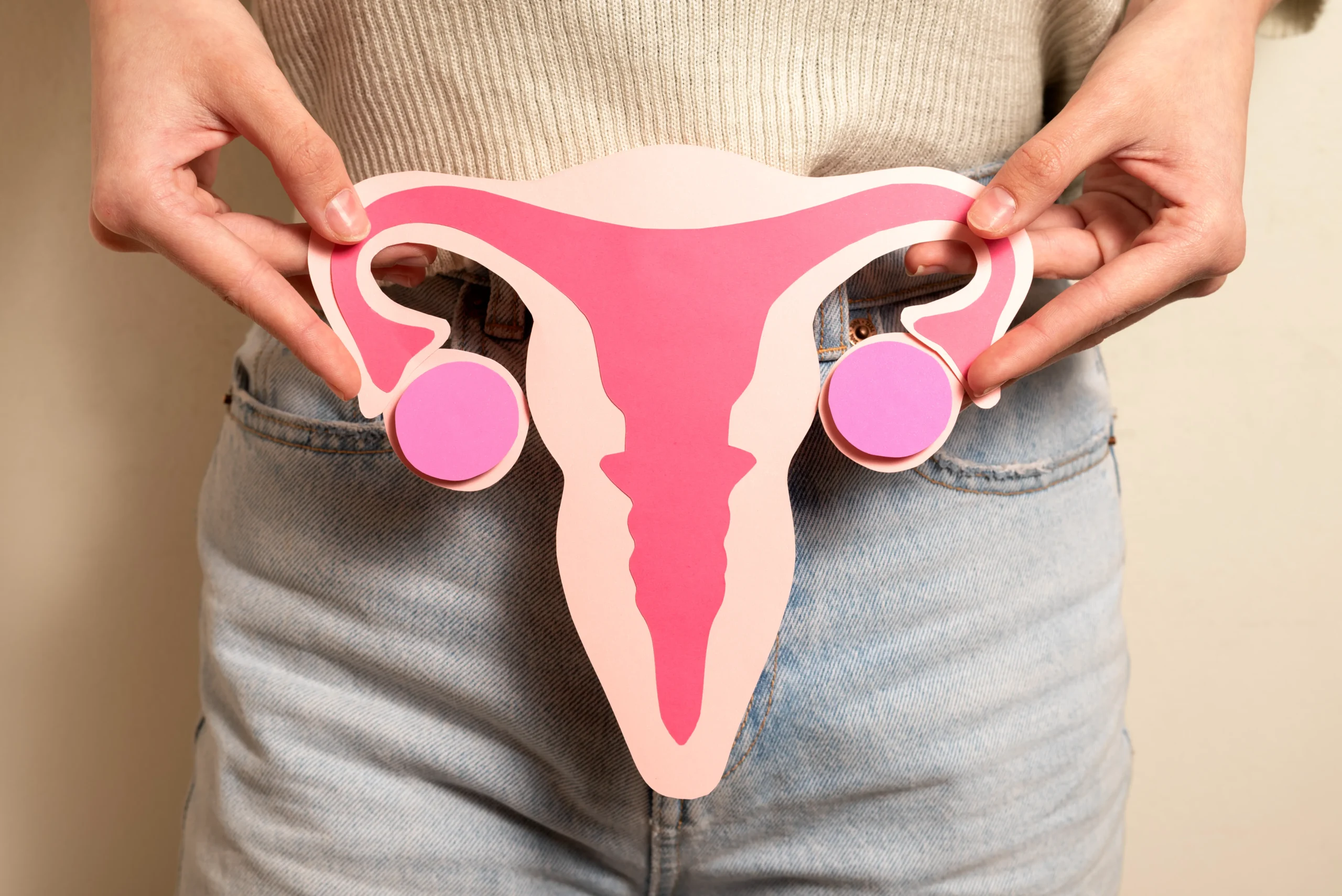
Found on a scan. Mentioned by a doctor in passing. Or discovered because of pain that finally became too much to ignore — this is how most women first hear about an ovarian cyst. And the immediate reaction is almost always the same: worry.
The good news is that ovarian cysts are extremely common, affect women of all ages, and in the vast majority of cases are completely benign. But that doesn't mean all cysts are the same, or that all of them should be dismissed. Understanding what you're dealing with is the first step to managing it with confidence.
Here's everything you need to know — from what an ovarian cyst actually is, to the types, symptoms, and the signs that mean it's time to call your doctor.
What Is an Ovarian Cyst?
An ovarian cyst is a fluid-filled sac that develops on or inside an ovary. Most are small, cause no symptoms, and disappear on their own within a few menstrual cycles — often without the woman ever knowing they were there. Ovarian cysts are very common. They can occur during the reproductive years or after menopause. Most ovarian cysts are benign and go away on their own without treatment.Rarely, a cyst may be malignant — but this is the exception, not the rule, and is far more likely in post-menopausal women than in those of reproductive age. Ovarian cysts are not the same as polycystic ovaries (a feature of PMOS, formerly PCOS). In PMOS, the ovaries contain multiple small follicles due to a hormonal condition — these are not true cysts in the clinical sense. If you've been diagnosed with PMOS or irregular periods, learn more at Menstrual Disorder Management at CareForHer.Types of Ovarian Cysts
Not all ovarian cysts are created equal. The type of cyst determines its cause, how likely it is to resolve on its own, and what treatment — if any — is needed.1. Functional Cysts (Most Common)
The two main types are follicular cysts (when a follicle does not release an egg) and corpus luteum cysts (when the follicle released an egg, but the empty follicle does not shrink). Most functional cysts disappear after a few menstrual cycles.They rarely cause symptoms and almost never require surgery.2. Endometriomas (Chocolate Cysts)
These develop when endometrial tissue — the lining of the uterus — attaches to the ovary and forms a cyst filled with dark, old blood. They are strongly associated with endometriosis and can affect fertility. Unlike functional cysts, endometriomas do not resolve on their own and often require treatment.3. Dermoid Cysts (Teratomas)
A teratoma is a cyst or benign tumour that contains different kinds of tissues that make up the body, such as skin and hair. They are usually benign but tend to grow slowly and typically need surgical removal when they reach a significant size or cause symptoms.4. Cystadenomas
These develop from the outer surface of the ovary and can grow quite large. They are filled with watery or mucous fluid. While usually benign, their size alone can cause discomfort and may warrant removal.5. Endometrioid and Other Complex Cysts
Classification of ovarian cysts includes endometriomas, dermoid cysts, and epithelial tumours, each with distinct histological features and clinical implications. Complex cysts those with solid components or irregular features on ultrasound — require closer monitoring and sometimes biopsy to rule out malignancy.Ovarian Cyst Symptoms: What Women Actually Experience
Here's the catch with ovarian cysts: most cause no symptoms at all. They are frequently discovered during a routine pelvic exam or ultrasound done for an unrelated reason. When symptoms do appear, they depend heavily on the cyst's size, type, and whether any complications have developed:Common ovarian cyst symptoms include:
- Dull or sharp pain on one side of the lower abdomen (the side where the cyst is)
- Bloating or a feeling of fullness in the pelvis
- Pain during or after sexual intercourse
- Irregular periods or spotting between periods
- Discomfort when urinating or a feeling of pressure on the bladder
- Pain during periods (dysmenorrhea) — especially with endometriomas
When to See a Doctor Urgently: Red Flag Symptoms
Most ovarian cysts are monitored, not emergencies. But certain symptoms require immediate medical attention: Go to a doctor urgently if you experience:- Sudden, severe abdominal or pelvic pain — this could indicate a ruptured ovarian cyst or ovarian torsion
- Pain with fever and vomiting — may signal infection or torsion
- Rapid heartbeat, dizziness, or fainting alongside pelvic pain — signs of internal bleeding from a ruptured cyst
- Sudden worsening of pain that was previously mild
- Persistent one-sided pelvic pain
- Bloating or abdominal swelling that doesn't resolve
- Periods becoming heavier, more irregular, or more painful
- Difficulty conceiving — endometriomas in particular can affect fertility
- Any new pelvic symptoms after menopause — post-menopausal cysts carry a higher risk of malignancy and always need evaluation
How Is an Ovarian Cyst Diagnosed?
Diagnosis begins with a pelvic exam — where the doctor may feel an enlarged ovary or area of tenderness. This is followed by:- Transvaginal or abdominal ultrasound — the gold standard for confirming a cyst, assessing its size, location, and whether it's simple (fluid only) or complex (contains solid elements)
- CA-125 blood test — a tumour marker used when malignancy is a concern; elevated levels can also occur with endometriosis, fibroids, or inflammation, so it is not diagnostic on its own
- MRI — used for complex or unclear cases to better characterise the cyst
Ovarian Cyst Treatment Options
While most ovarian cysts are harmless, some may grow large enough to cause pain or disrupt the menstrual cycle. The treatment depends on their type and size. Watchful waiting: For small, simple, asymptomatic cysts — especially functional ones — monitoring with follow-up ultrasound every 6–12 weeks is appropriate. Most resolve on their own. Hormonal medication: Oral contraceptives don't shrink existing cysts but can prevent new functional cysts from forming in women who develop them repeatedly. Laparoscopic cystectomy: Minimally invasive keyhole surgery to remove the cyst while preserving the ovary. This is the preferred surgical approach for most benign cysts and is offered at CareForHer — see Gynaecological Surgeries & Procedures. Oophorectomy: Removal of the entire ovary — considered only when the cyst is very large, complex, or when malignancy cannot be ruled out. If your cyst is linked to endometriosis or hormonal conditions, treatment may also involve hormonal therapy to manage the underlying cause and reduce recurrence.See a Specialist in Goregaon, Mumbai
If you've been told you have an ovarian cyst — or are experiencing unexplained pelvic pain, irregular periods, or bloating — the right next step is a proper evaluation, not a wait-and-see approach based on anxiety alone. At Care For Her in Goregaon East, Dr. Anuja Ojha offers comprehensive ovarian cyst assessment including pelvic exam, ultrasound, and personalised management — whether that's monitoring, medication, or surgery. Book a consultation with Dr. Anuja Ojha, Gynaecologist in Goregaon East →Frequently Asked Questions (FAQs)
Q1. What is an ovarian cyst and is it dangerous?
An ovarian cyst is a fluid-filled sac on or inside the ovary. Most are benign and resolve on their own — they are only dangerous when they rupture, cause torsion, or show signs of malignancy.Q2. What are the symptoms of an ovarian cyst?
Most cysts cause no symptoms. When they do, common signs include one-sided pelvic pain, bloating, pain during sex, and irregular periods. Sudden severe pain may indicate rupture or torsion — see a doctor immediately.Q3. Can an ovarian cyst go away on its own?
Yes — functional cysts (the most common type) usually resolve within 1–3 menstrual cycles without any treatment. Other types like endometriomas and dermoid cysts are unlikely to disappear on their own.Q4. What is the difference between an ovarian cyst and PCOS (PMOS)?
An ovarian cyst is a single fluid-filled sac. PMOS (formerly PCOS) is a hormonal condition where the ovaries contain multiple small follicles. They are different conditions, though they can coexist.Q5. When should I be worried about an ovarian cyst?
Seek urgent care for sudden severe pelvic pain, fever, vomiting, or dizziness alongside pelvic pain — these could indicate rupture or torsion. See a doctor soon for persistent pain, bloating, or any new symptoms after menopause.Q6. How is an ovarian cyst treated?
Treatment depends on type and size. Small, simple cysts are monitored. Hormonal medication can prevent recurrence. Surgery (laparoscopic cystectomy) is used for large, persistent, or complex cysts.Q7. Can an ovarian cyst affect fertility?
It depends on the type. Functional cysts rarely affect fertility. Endometriomas can significantly impact egg quality and ovarian reserve. If you're trying to conceive and have a cyst, get a fertility evaluation at CareForHer.Citations & References
- Manipal Hospitals. Ovarian Cyst Symptoms, Diagnosis, Treatment & Prevention Guide. Published February 2026. manipalhospitals.com
- American College of Obstetricians and Gynecologists (ACOG). Ovarian Cysts. FAQ075. Last reviewed July 2025. acog.org
- Dharani et al. Clinicopathological Study of Ovarian Cysts. Indian Journal of Obstetrics and Gynecology Research. 2026;13(1):141–147. ijogr.org
- Max Healthcare. Ovarian Cyst Treatment in Delhi, India: Types & Risks. Reviewed December 2025. maxhealthcare.in
- BLK-Max Hospital. Ovarian Cyst Treatment in Delhi, India: Symptoms & Causes. blkmaxhospital.com
- TACA Healthcare. Complete Guide to Ovarian Cyst Treatment in India. tacahealthcare.com