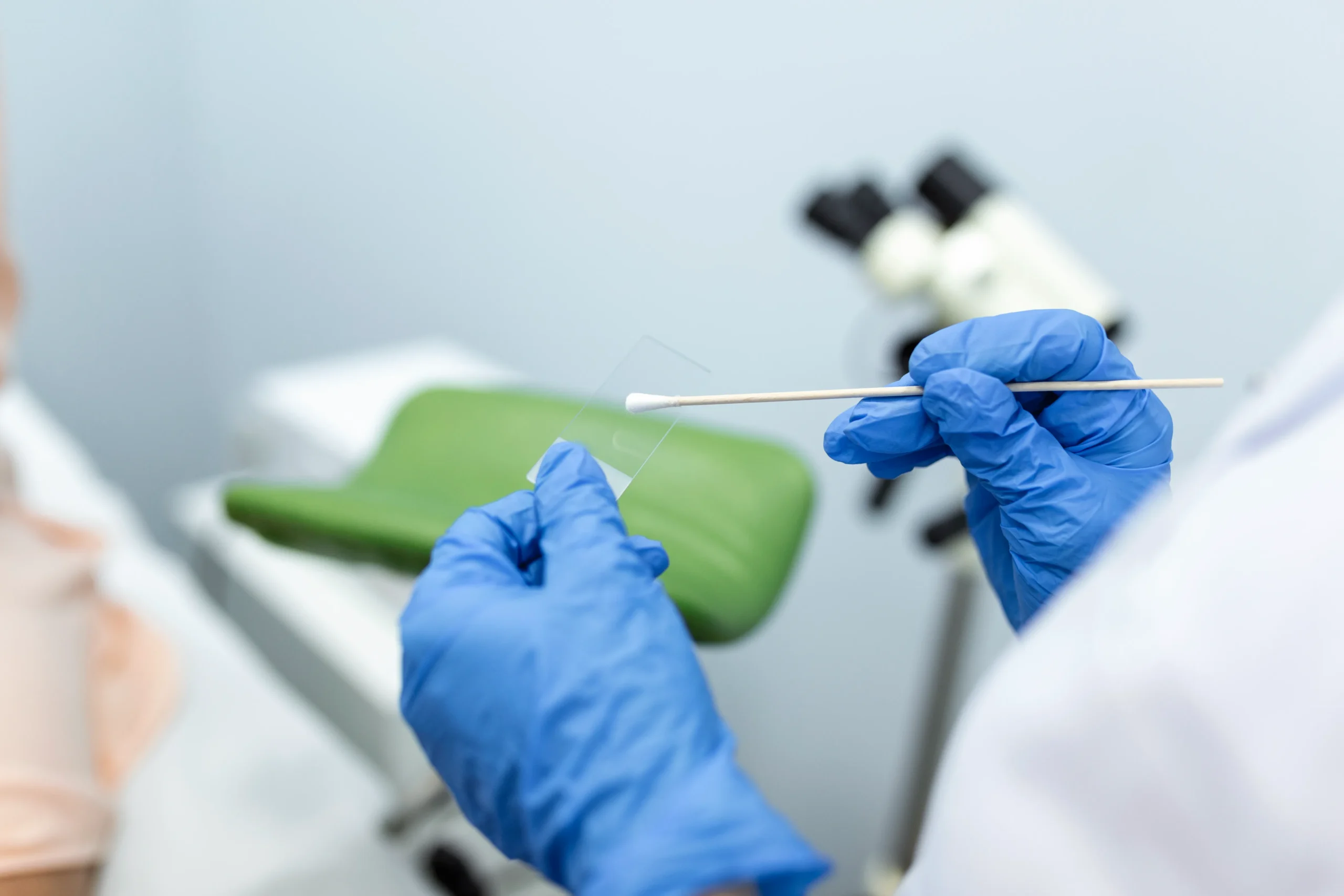
Pap Smear Test: What It Is, Who Needs It & What Your Results Mean

Cervical cancer is the second most common cancer in Indian women — and one of the most preventable. The Pap smear test is one of the most powerful tools we have to catch it early, often years before it becomes a problem. Yet cervical cancer screening uptake in India remains critically low, estimated at under 3% nationally.

Most women who skip their Pap smear aren’t indifferent to their health. They simply don’t know when to start, what the test actually involves, or what their results mean. This guide answers all of that — clearly, honestly, and without jargon.

What Is a Pap Smear Test?

A Pap smear — also called a Pap test or cervical cytology — is a quick, simple screening procedure that collects a small sample of cells from the cervix (the lower part of the uterus that opens into the vagina). These cells are examined under a microscope to detect any abnormal changes that could indicate precancerous or cancerous conditions.

It is important to understand what the Pap smear is — and isn’t. It is a screening test, not a diagnostic test. It doesn’t confirm cancer; it identifies cells that warrant further investigation. It also does not test for STIs like chlamydia or gonorrhoea — those require separate tests.

The Pap smear is often done alongside an HPV test — a combination called co-testing — which checks for the presence of high-risk HPV strains most associated with cervical cancer. Together, they offer the most comprehensive cervical screening available.

Who Needs a Pap Smear and When to Start

In India, FOGSI (Federation of Obstetric and Gynaecological Societies of India) guidelines, aligned with international best practice, recommend:

Age Group

Recommendation

Under 21

Screening not required

21–29

Pap smear every 3 years
30–65

Pap smear every 3 years, OR Pap + HPV co-test every 5 years

Over 65

May stop if 3 consecutive normal results and no history of abnormal cells
Post-hysterectomy (for benign reasons)

Routine screening can usually be discontinued

Immunocompromised women (HIV, on immunosuppressants)

More frequent screening; discuss with your doctor

A common misconception: Many women believe a Pap smear is only necessary if they are sexually active or have had multiple partners. While sexual activity is a risk factor for HPV exposure, FOGSI recommends that all women between 21 and 65 — regardless of sexual history or HPV vaccination status — undergo cervical screening on schedule.

Even if you’ve had the HPV vaccine, continue your Pap smears. The vaccine protects against the most common cancer-causing HPV strains but not all of them. Regular Routine Check-ups & Prevention at CareForHer include cervical screening as part of a comprehensive women’s health check.

What Happens During a Pap Smear?

The procedure takes less than 5 minutes and is done in your gynaecologist’s clinic.

Step by step:

  1. You lie on an examination table with your knees bent (similar to a pelvic exam position)
  2. A small instrument called a speculum is gently inserted into the vagina to hold the walls apart and allow the cervix to be visible
  3. A soft brush or spatula is used to gently collect cells from the surface of the cervix — most women feel mild pressure or a brief, dull ache; it is rarely painful
  4. The sample is sent to a lab for analysis
  5. Results are typically available within 5–7 days

To get the most accurate results:

  • Avoid sexual intercourse, douching, or vaginal medications for 48 hours before the test
  • Do not schedule during your period — ideally mid-cycle (days 10–20) is best
  • You can have a Pap smear during pregnancy (up to 24 weeks is generally safe)

How Much Does a Pap Smear Cost in India?

Pap smear costs in India vary depending on the setting:

Setting

Approximate Cost
Government hospitals

Free or nominal fee

Diagnostic labs (SRL, Metropolis, Dr. Lal)

₹300–₹800
Private gynaecology clinics

₹500–₹1,500

Co-test (Pap + HPV)

₹1,500–₹3,500

The cost is a small investment compared to the cost — financial and physical — of treating cervical cancer detected late. At CareForHer in Goregaon East, cervical screening is offered as part of a comprehensive Sexual & Reproductive Health consultation.

Understanding Your Pap Smear Results

Results are typically reported using the Bethesda System. Here’s what each finding means:

Normal / Negative Result

NILM (Negative for Intraepithelial Lesion or Malignancy) — the most common result. Your cervical cells are healthy with no abnormal changes detected. Continue routine screening on schedule. No further action required.

Abnormal Results — What They Actually Mean

ASC-US (Atypical Squamous Cells of Undetermined Significance) Mildly abnormal cells that don’t clearly indicate precancer. Usually triggered by an HPV infection, inflammation, or hormonal changes. An HPV reflex test is typically ordered next. Most ASC-US findings resolve on their own without treatment.

LSIL (Low-Grade Squamous Intraepithelial Lesion) Mild abnormalities, usually associated with HPV infection. Often resolves without treatment, particularly in younger women. Your doctor will monitor with a repeat Pap smear or colposcopy (a closer examination of the cervix) within 6–12 months.

HSIL (High-Grade Squamous Intraepithelial Lesion) More significant abnormal cell changes with a higher risk of progression to cervical cancer if left untreated. Requires colposcopy and possible biopsy. This does not mean cancer — it means precancerous changes that need treatment to prevent cancer from developing.

ASC-H (Atypical Squamous Cells — Cannot Exclude HSIL) Ambiguous abnormal cells that cannot be clearly classified. Colposcopy is recommended.

Squamous Cell Carcinoma / Adenocarcinoma Cells Cells that are almost certainly cancerous. Requires immediate specialist referral and further investigation. This is rare — it is the scenario that routine Pap smears are designed to prevent by catching changes at an earlier stage.

Unsatisfactory Result The sample did not contain enough cells for reliable analysis. The test simply needs to be repeated — this is not an abnormal result.

Abnormal Result: What Happens Next?

An abnormal Pap smear is not a cancer diagnosis — it is a signal to look more closely. The most common next step is a colposcopy: a procedure where your gynaecologist uses a magnifying instrument with a light to examine the cervix in detail. A small biopsy may be taken if areas of concern are identified.

If precancerous changes (CIN — Cervical Intraepithelial Neoplasia) are confirmed, they can be treated with a simple outpatient procedure — such as LEEP (Loop Electrosurgical Excision Procedure) or cryotherapy — that removes the abnormal tissue before it has any chance to progress. This is exactly what early detection is designed to achieve.

If you’ve received an abnormal Pap smear result and need guidance on next steps, a consultation with Dr. Anuja Ojha at CareForHer will walk you through exactly what your result means and what, if anything, needs to happen next. Explore Gynaecological Surgeries & Procedures at CareForHer for further information on cervical procedures.

Pap Smear vs HPV Test: Which Do You Need?

Pap Smear

HPV Test

What it checks

Abnormal cervical cells Presence of high-risk HPV virus
Age to start 21

25–30 (per Indian guidelines)

Frequency

Every 3 years Every 5 years
Best used Ages 21–29 alone; 30–65 ideally combined

Ages 30–65, ideally with Pap smear

Can replace each other?

Not entirely

Not entirely

For women over 30, the co-test (Pap + HPV together) is the most comprehensive option and is now widely available across Mumbai’s private labs and clinics. Ask your gynaecologist which combination is right for your age and risk profile.

See a Specialist in Goregaon, Mumbai

A Pap smear takes less time than a coffee break. It causes minimal discomfort. And it could detect a change in your cervical cells years before cervical cancer develops — giving you time to treat it completely.

If you’re due for a Pap smear, have never had one, or received an abnormal result and need guidance, Dr. Anuja Ojha at Care For Her, Goregaon East, offers cervical screening, HPV co-testing, and colposcopy in a comfortable, private clinical environment.

Also explore the HPV Vaccine at CareForHer — vaccination and screening together offer the strongest protection against cervical cancer.

Book a consultation with Dr. Anuja Ojha, Gynaecologist in Goregaon East →

Frequently Asked Questions (FAQs)

Q1. What does a Pap smear test check for?

A Pap smear checks for abnormal or precancerous cells on the cervix that could develop into cervical cancer if left untreated. It does not test for STIs, pregnancy, or ovarian conditions.

Q2. At what age should I start getting a Pap smear in India?

FOGSI guidelines recommend starting at age 21 for sexually active women. Women aged 21–29 should have a Pap smear every 3 years; women aged 30–65 should have a Pap smear every 3 years or a Pap + HPV co-test every 5 years.

Q3. Does a Pap smear hurt?

Most women feel mild pressure or a brief dull ache — not pain. The procedure takes less than 5 minutes. Anxiety often makes it feel worse in anticipation than it actually is. Inform your doctor if you’re nervous; they can talk you through each step.

Q4. What does an abnormal Pap smear result mean?

An abnormal result means some cervical cells look different from normal. It does not mean cancer. Depending on the type of abnormality, you may need a repeat Pap smear, an HPV test, or a colposcopy for closer examination. Most abnormal results resolve without treatment.

Q5. Do I need a Pap smear if I’ve had the HPV vaccine?

Yes. The HPV vaccine protects against the most common cancer-causing strains but not all of them. Routine Pap smears remain necessary even after vaccination, on the same schedule as unvaccinated women.

Q6. How much does a Pap smear cost in India?

At diagnostic labs, it costs ₹300–₹800. At private clinics, ₹500–₹1,500. A Pap + HPV co-test costs ₹1,500–₹3,500. Government hospital testing is free or near-free.

Q7. Can I have a Pap smear during my period?

It is best to avoid scheduling during your period as blood can interfere with cell analysis. Aim for mid-cycle — around days 10–20. If your appointment falls during your period, reschedule rather than skip it.

Citations & References

  1. Fertilia. Pap Smear Cost in India: Price, When & How Often. Published July 2026. fertilia.in

  2. Apollo Hospitals. PAP Smear Test — Purpose, Results, Normal Range and More. apollohospitals.com

  3. Metropolis India. Pap Smear Test: Purpose, Procedure, Risks & Why It’s Important. Updated March 2026. metropolisindia.com

  4. Mayo Clinic. Pap Smear. mayoclinic.org

  5. American College of Obstetricians and Gynecologists (ACOG). Cervical Cancer Screening Infographic. acog.org

  6. National Cancer Institute (NCI). Cervical Cancer Screening. cancer.gov

  7. ICMR — National Institute of Cancer Prevention and Research. Cervical Cancer Screening Guidelines for India. icmr.gov.in

This blog is for informational purposes only and does not constitute medical advice. For cervical screening at CareForHer, Goregaon East, Mumbai — consult Dr. Anuja Ojha. Book online or call 7400424637.

What Is Amenorrhoea (Missed Periods)? Causes & When to Worry

A missed period is one of the most common reasons women consult a gynaecologist — and one of the most anxiety-inducing. The first thought is almost always pregnancy. But when a test comes back negative, the question shifts: why has my period stopped?

The medical term for absent periods is amenorrhoea — and it is more common than most women realise. It affects women across all age groups, has a wide range of causes, and in the vast majority of cases is completely treatable once the underlying reason is identified.

Here’s a clear guide to understanding amenorrhoea: what it is, what causes it, and — most importantly — when it’s something you need to act on quickly.

What Is Amenorrhoea?

Amenorrhoea is the absence of menstruation. It is classified into two types based on when it occurs:

Primary Amenorrhoea

This is when a girl has not had her first period by the age of 15, despite the development of other signs of puberty such as breast growth and pubic hair. It may also be diagnosed when there are no signs of puberty by age 13. Primary amenorrhoea affects approximately 1 in 200 young women and usually requires specialist investigation of hormonal or structural causes.

For concerns related to puberty and adolescent menstrual health, explore Adolescent & Puberty-Related Issues at CareForHer.

Secondary Amenorrhoea

This is far more common. It refers to the absence of periods for 3 or more consecutive months in a woman who previously had regular cycles, or 6 or more months in a woman with previously irregular periods. Pregnancy is the most common cause and should always be ruled out first — but when a test is negative, a broader evaluation is essential.

Common Causes of Amenorrhoea

Periods don’t stop without a reason. Here are the most clinically significant causes, many of which are highly prevalent in Indian women:

1. Pregnancy and Breastfeeding

The most common cause of a missed period in women of reproductive age. Breastfeeding raises prolactin levels, which suppresses ovulation — causing lactational amenorrhoea that can last months after delivery.

2. PMOS (Formerly PCOS) — Polycystic Ovary Syndrome

One of the leading hormonal causes of irregular or absent periods in India. Elevated androgen levels and insulin resistance disrupt the normal hormonal signals needed to trigger ovulation and menstruation. Women with PMOS may go weeks or months between periods — or stop having them altogether for extended stretches. Learn more about Menstrual Disorder Management at CareForHer.

3. Thyroid Disorders

Both underactive (hypothyroidism) and overactive (hyperthyroidism) thyroid conditions can disrupt the menstrual cycle. Thyroid disorders are highly prevalent in Indian women and are one of the most commonly missed causes of amenorrhoea. A simple TSH blood test is often all that’s needed to identify or rule this out.

4. Hypothalamic Amenorrhoea (Stress, Weight, and Exercise)

The hypothalamus is the part of the brain that sends signals to trigger the menstrual cycle. Chronic physical or emotional stress, sudden or significant weight loss, very low body fat, or excessive exercise can all suppress hypothalamic function — causing periods to stop. This is increasingly common in urban Indian women managing high-pressure professional and personal lives.

5. Elevated Prolactin (Hyperprolactinaemia)

Prolactin is the hormone that stimulates breast milk production. When prolactin levels are abnormally high outside of pregnancy or breastfeeding — due to a small benign pituitary tumour called a prolactinoma, or certain medications — it can suppress ovulation and stop periods. Symptoms often include milky nipple discharge (galactorrhoea) alongside missed periods.

6. Premature Ovarian Insufficiency (POI)

Also called premature ovarian failure, this condition occurs when the ovaries stop functioning normally before age 40 — leading to low oestrogen, absent periods, and symptoms similar to early menopause. It affects approximately 1 in 100 women under 40 and requires careful management, including hormonal therapy to protect bone and cardiovascular health.

7. Asherman’s Syndrome (Uterine Scarring)

Scar tissue (adhesions) inside the uterine cavity — typically from a D&C procedure, uterine surgery, or severe infection — can cause periods to stop. This is a structural cause of amenorrhoea that requires hysteroscopic surgical treatment.

8. Contraception

Certain hormonal contraceptives — particularly the injectable contraceptive (Depo-Provera), the progesterone-only implant, and the levonorgestrel IUD — commonly cause periods to stop. This is an expected side effect, not a medical concern. However, if periods don’t return within 3 months of stopping hormonal contraception, an evaluation is warranted.

9. Significant Weight Changes and Eating Disorders

Extreme weight loss, very low BMI, or conditions like anorexia nervosa reduce the body’s oestrogen production — triggering hypothalamic suppression and amenorrhoea. This is a red flag that needs sensitive, multidisciplinary management including nutritional and psychological support.

10. Menopause

Natural menopause — the permanent cessation of periods — typically occurs between ages 45 and 55 in Indian women. If you’re experiencing missed periods alongside hot flashes, night sweats, and mood changes, explore Menopause & Hormonal Therapy at CareForHer.

How Is Amenorrhoea Diagnosed?

When you see your gynaecologist for missed periods, expect the following:

History: When did your periods stop? Were they previously regular? Any recent weight changes, stress, new medications, or contraceptive use? Are there other symptoms like milky discharge, hot flashes, acne, or hair growth?

Key investigations:

Test

What It Checks

Urine or blood pregnancy test

Rules out pregnancy first
TSH (thyroid)

Thyroid function

Prolactin

Rules out prolactinoma
FSH and LH

Ovarian function and pituitary signalling

AMH

Ovarian reserve — important for fertility planning
Oestradiol

Oestrogen levels

Testosterone and DHEAS

Rules out androgen excess (PMOS)
Pelvic ultrasound

Checks ovaries, uterus, and endometrial lining

MRI brain (if needed)

Investigates pituitary gland if prolactin is elevated

Amenorrhoea and Fertility: What You Need to Know

If periods have stopped, ovulation has likely stopped too — which directly affects the ability to conceive. The good news is that most causes of amenorrhoea are treatable, and restoring ovulation is achievable in the majority of cases.

Whether through thyroid treatment, ovulation induction for PMOS, weight restoration, or prolactin-lowering medication, most women with amenorrhoea can regain regular cycles and conceive with the right management. For a comprehensive fertility evaluation, explore Infertility Treatment at CareForHer.

When Should You Worry? Red Flags to Act On

Most causes of amenorrhoea are benign and manageable. However, seek medical evaluation promptly if you notice:

  • Periods absent for 3 or more consecutive months with a negative pregnancy test
  • Milky nipple discharge alongside missed periods (may indicate a prolactinoma)
  • Sudden severe weight loss or inability to eat — eating disorder-linked amenorrhoea needs urgent multidisciplinary care
  • Hot flashes, night sweats, and vaginal dryness in a woman under 40 — possible premature ovarian insufficiency
  • Severe pelvic pain alongside absent periods — rules out structural or gynaecological causes
  • Vision changes or persistent headaches — can indicate a pituitary tumour pressing on the optic nerve
  • Period never starting by age 15 — primary amenorrhoea requires early specialist evaluation to rule out structural or chromosomal causes

Regular routine gynaecological check-ups remain the most reliable safety net — many hormonal conditions underlying amenorrhoea are identified through routine blood tests before symptoms escalate.

Amenorrhoea Treatment: What to Expect

Treatment is always targeted at the underlying cause — not the absent period itself. There is no single “cure” for amenorrhoea; the right treatment depends entirely on what’s driving it.

  • PMOS: Lifestyle changes, metformin, hormonal therapy, or ovulation induction depending on goals
  • Thyroid disorders: Thyroid hormone replacement (hypothyroidism) or treatment to reduce thyroid activity (hyperthyroidism)
  • Hypothalamic amenorrhoea: Stress reduction, nutritional rehabilitation, reducing exercise intensity, psychological support
  • Hyperprolactinaemia: Dopamine agonist medication (cabergoline or bromocriptine) — highly effective and usually avoids surgery
  • Premature ovarian insufficiency: Hormonal replacement therapy to protect bone density and cardiovascular health; fertility options discussed with a specialist
  • Asherman’s syndrome: Hysteroscopic surgical removal of adhesions
  • Post-contraceptive: Usually watchful waiting; ovulation induction if conception is the goal

See a Specialist in Goregaon, Mumbai

A missed period that lasts more than three months — with a negative pregnancy test — is your body signalling that something needs attention. It doesn’t mean something is seriously wrong, but it does mean something is worth investigating.

At Care For Her in Goregaon East, Dr. Anuja Ojha offers comprehensive evaluation for amenorrhoea — including hormonal blood tests, pelvic ultrasound, and personalised treatment planning — with a clear, step-by-step approach from diagnosis to management.

Book a consultation with Dr. Anuja Ojha, Gynaecologist in Goregaon East →

Frequently Asked Questions (FAQs)

Q1. What is amenorrhoea?

Amenorrhoea is the medical term for absent periods. Primary amenorrhoea means periods haven’t started by age 15. Secondary amenorrhoea means periods have stopped for 3 or more consecutive months in a woman who previously had cycles.

Q2. What are the most common causes of missed periods in India?

Pregnancy, PMOS (formerly PCOS), thyroid disorders, stress, significant weight changes, and hormonal contraception are the most common causes in Indian women. A gynaecologist can identify the specific cause with a few targeted tests.

Q3. How many missed periods should I be worried about?

See a doctor after 3 consecutive missed periods with a negative pregnancy test. Don’t wait longer — many underlying causes are easier to treat when identified early.

Q4. Can stress cause periods to stop?

Yes. Chronic emotional or physical stress suppresses the hypothalamus — the part of the brain that triggers the hormonal cascade for menstruation. This is called hypothalamic amenorrhoea and is increasingly common in urban Indian women.

Q5. Can amenorrhoea affect fertility?

Yes — absent periods usually mean absent ovulation, which directly affects the ability to conceive. Most causes are treatable, and restoring ovulation is achievable in the majority of cases with the right management.

Q6. Will my periods come back after stopping birth control?

For most women, periods return within 1–3 months of stopping hormonal contraception. If they don’t return within 3 months, consult a gynaecologist to rule out an underlying hormonal condition.

Q7. Is amenorrhoea the same as PCOS?

No — but PMOS (formerly PCOS) is one of the most common causes of amenorrhoea. PMOS is a hormonal condition; amenorrhoea is a symptom that can arise from many different conditions, including PMOS.

Citations & References

  1. Apollo 247. Amenorrhea Symptoms, Causes, and Treatment Options. apollo247.com

  2. Medical News Today. Absence of Menstruation (Amenorrhoea): 13 Causes. Updated August 2026. medicalnewstoday.com

  3. IVF Spain. Amenorrhoea: Causes of Missed Periods and When to Worry. Published August 2026. ivf-spain.com

  4. Healthline. Amenorrhea: Causes, Treatment, and Prevention. healthline.com

  5. Ubie Health. Missed Period? Why Your Body Has Amenorrhea and Medically Approved Next Steps. Published March 2026. ubiehealth.com

  6. Bals-Pratsch M, et al. Amenorrhea — Diagnosis and Treatment. Deutsche Medizinische Wochenschrift. 2022. PubMed. pubmed.ncbi.nlm.nih.gov

  7. American College of Obstetricians and Gynecologists (ACOG). Amenorrhea: Absence of Periods. FAQ. acog.org

This blog is for informational purposes only and does not constitute medical advice. For a personalised evaluation, consult Dr. Anuja Ojha at Care For Her, Goregaon East, Mumbai — book online or call 7400424637.