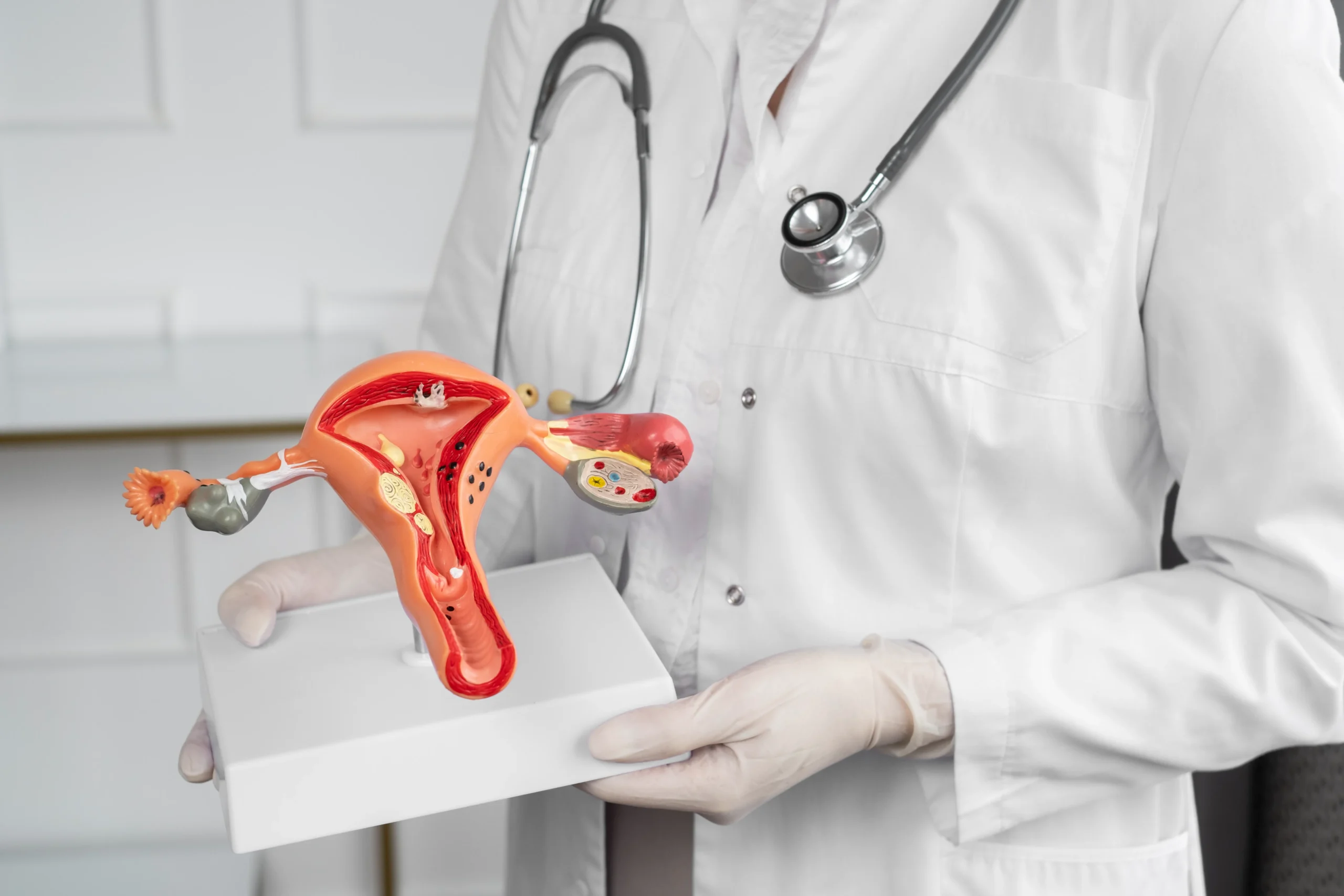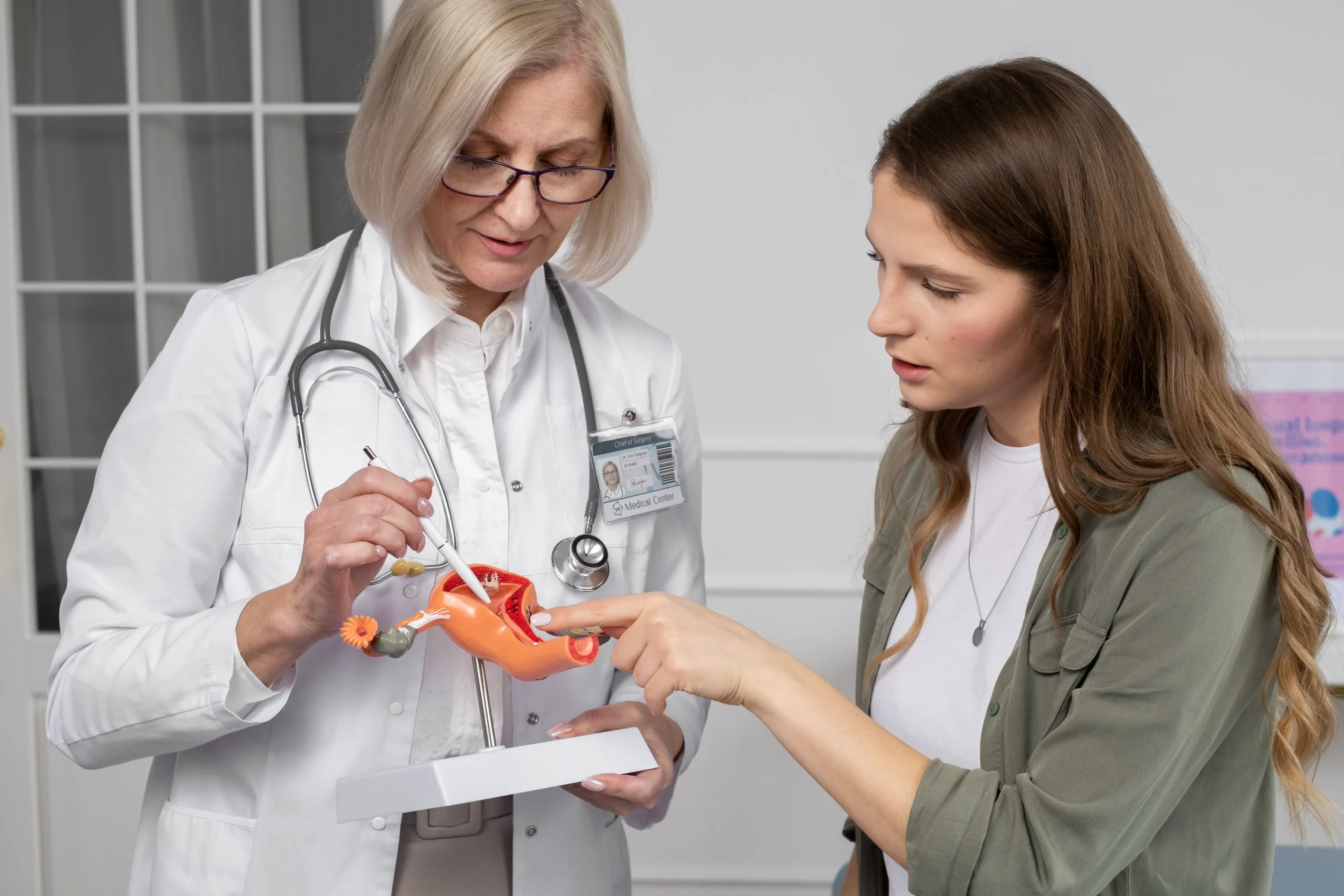
Pelvic pain. Heavy periods. A bloated feeling you can’t explain. These are symptoms that bring thousands of women to their gynaecologist every year — and more often than not, the two conditions behind them are ovarian cysts and uterine fibroids.
Both are incredibly common. Both are frequently misunderstood. And because their symptoms can overlap, many women spend weeks — or months — worrying about which one they have, what it means, and whether it’s serious.
This guide breaks it all down: what each condition actually is, how to tell the difference, and — most importantly — when to stop waiting and see a doctor.
What Are Ovarian Cysts?
Ovarian cysts are fluid-filled sacs that form on or inside the ovaries. The most common type — functional cysts — develop as a normal part of the menstrual cycle and usually disappear on their own within a few weeks to months. They are almost always benign.
There are several types of ovarian cysts:
- Follicular cysts — form when a follicle doesn’t release an egg during ovulation
- Corpus luteum cysts — develop when the follicle seals after releasing an egg and fills with fluid
- Endometriomas — linked to endometriosis, often called “chocolate cysts” due to their dark fluid content
- Dermoid cysts — contain tissue like hair or skin; less common but may require removal
Most ovarian cysts cause no symptoms at all and are discovered during a routine pelvic exam or ultrasound. When symptoms do appear, they tend to include bloating, a dull ache on one side of the lower abdomen, or discomfort during periods or intercourse.
If you’re experiencing irregular or painful periods, an ovarian cyst may be contributing — and it’s worth getting checked.
What Are Uterine Fibroids?
Fibroids — medically known as leiomyomas or uterine fibroids — are solid, non-cancerous growths made of muscle and fibrous tissue that develop in or on the wall of the uterus. They are the most common benign tumour in women of reproductive age, with studies from India showing a prevalence of around 20% among women aged 30–39.
Unlike cysts, fibroids are solid (not fluid-filled) and grow in the uterus, not the ovaries. They can be as small as a seed or grow to the size of a grapefruit — and a woman can have more than one at a time.
Common fibroid symptoms include:
- Heavy or prolonged menstrual bleeding (menorrhagia)
- Pelvic pressure or fullness
- Frequent urination or difficulty emptying the bladder
- Lower back pain
- Pain during intercourse
- Anaemia from blood loss
Fibroids are strongly influenced by oestrogen levels, which is why they tend to grow during reproductive years and often shrink after menopause. Factors like obesity, Vitamin D deficiency, and a diet high in refined carbohydrates — all prevalent concerns in urban India — may increase the risk.
Ovarian Cysts vs Fibroids: The Key Differences
Here’s a simple breakdown of the difference between fibroids and ovarian cysts:
| Ovarian Cysts | Uterine Fibroids | |
|
Location |
Ovaries | Uterus |
|
Composition |
Fluid-filled | Solid (muscle & fibrous tissue) |
| Who is affected | Any age; common in reproductive years |
Most common in women aged 30–50 |
|
Menstrual impact |
Mild or none | Often heavy, prolonged bleeding |
| Pain pattern | One-sided, sudden if ruptured |
Pelvic pressure, dull, persistent |
|
Fertility impact |
Can affect ovulation | Can affect implantation |
|
Resolves on its own? |
Often yes (functional cysts) |
Rarely without treatment |
| Diagnosed by | Ultrasound ± CA-125 blood test |
Ultrasound, MRI |
One key distinguishing clue: pain location. Ovarian cyst pain tends to be felt on one specific side of the lower abdomen. Fibroid-related discomfort is usually more central — a heaviness or pressure across the pelvis rather than a sharp, localised ache.
Can You Have Both at the Same Time?
Yes — and it’s more common than many people realise. Ovarian cysts and uterine fibroids can coexist, and both are driven partly by hormonal imbalance, particularly elevated oestrogen levels. Women with conditions like PMOS (formerly PCOS), endometriosis, or obesity may be more prone to developing both simultaneously.
This overlap in causes is exactly why a thorough clinical evaluation — including a pelvic exam, ultrasound, and sometimes blood tests — is essential. Self-diagnosing based on symptoms alone is not reliable.
When Should You Worry? Red Flag Symptoms
Most ovarian cysts and many fibroids are manageable and not dangerous. However, certain symptoms should prompt you to seek care promptly:
See a doctor urgently if you experience:
- Sudden, severe abdominal or pelvic pain — this could indicate a ruptured cyst or ovarian torsion (a medical emergency)
- Heavy bleeding soaking through pads or tampons rapidly
- Fever alongside pelvic pain
- Significant bloating that doesn’t resolve
- Difficulty urinating or a feeling of bladder pressure
See a doctor soon if you notice:
- Periods consistently lasting more than 7 days
- Anaemia symptoms (fatigue, dizziness, pallor) due to heavy bleeding
- Difficulty conceiving — both conditions can impact fertility
- Pelvic pain that disrupts daily life or sleep
- Bloating or abdominal swelling that feels new or worsening
In India, a significant proportion of women delay seeking care because they normalise heavy bleeding or pelvic discomfort as “just periods.” This is something Dr. Anuja Ojha at CareForHer actively addresses — early diagnosis can make a significant difference in your treatment options and long-term outcomes. Regular routine check-ups and prevention care are the simplest way to catch these conditions before they escalate.
How Are They Diagnosed and Treated?
Diagnosis for both conditions typically starts with a pelvic exam followed by a transvaginal or abdominal ultrasound. An MRI may be ordered for fibroids before surgery. For suspicious cysts, a CA-125 blood test may be added to rule out malignancy — though a high CA-125 does not automatically mean cancer.
Treatment depends on size, symptoms, age, and whether you’re planning a pregnancy:
- Watchful waiting — for small, asymptomatic cysts or fibroids; monitored with regular ultrasounds
- Hormonal therapy — to manage symptoms and regulate oestrogen levels; explore Menopause & Hormonal Therapy options at CareForHer
- Medication — pain management, iron supplements for anaemia, or hormonal drugs to shrink fibroids
- Minimally invasive surgery — laparoscopy for cyst removal, or myomectomy for fibroids while preserving fertility; see our Gynaecological Surgeries & Procedures page for more
- Hysterectomy — considered only in severe cases or when childbearing is complete
If pelvic pain is a persistent concern, our Pelvic Health & Urinary Disorders service can also provide specialist evaluation.
Getting the Right Diagnosis in Goregaon, Mumbai
If you’ve been experiencing any of the symptoms above — heavy periods, pelvic pain, unexplained bloating, or difficulty conceiving — the right next step is a proper gynaecological evaluation, not a Google search.
At Care For Her in Goregaon East, Dr. Anuja Ojha offers comprehensive assessment for ovarian cysts, uterine fibroids, and related conditions — with a patient-first approach, ultrasound facilities, and personalised treatment plans.
Book a consultation with Dr. Anuja Ojha — Gynaecologist in Goregaon East →
Frequently Asked Questions (FAQs)
Q1. What is the main difference between ovarian cysts and fibroids?
The key difference lies in location and composition. Ovarian cysts are fluid-filled sacs that develop on or inside the ovaries. Uterine fibroids are solid, non-cancerous growths made of muscle and fibrous tissue that form in or on the wall of the uterus. Despite overlapping symptoms like pelvic pain and bloating, they are distinct conditions requiring different management approaches.
Q2. Can ovarian cysts or fibroids cause infertility?
Yes, both conditions can affect fertility. Large ovarian cysts — particularly endometriomas — can disrupt ovulation. Fibroids, depending on their location and size, can interfere with embryo implantation or block the fallopian tubes. However, many women with either condition conceive successfully with the right treatment. Learn more about Infertility Treatment at CareForHer.
Q3. How do I know if my pelvic pain is from a cyst or a fibroid?
You can’t reliably tell from symptoms alone — an ultrasound is needed for a definitive answer. That said, one-sided lower abdominal pain is more characteristic of an ovarian cyst, while a dull, central pelvic pressure or heaviness is more typical of fibroids. Sudden, severe pain may indicate a ruptured cyst and requires urgent medical attention.
Q4. Do ovarian cysts go away on their own?
Functional ovarian cysts — the most common type — often resolve on their own within one to three menstrual cycles without treatment. However, other types (endometriomas, dermoid cysts) are unlikely to disappear without intervention. Your doctor will monitor cyst size and type with follow-up ultrasounds to guide the decision.
Q5. Are fibroids cancerous?
Uterine fibroids are almost always benign (non-cancerous). Malignant transformation — where a fibroid becomes cancerous — is extremely rare, occurring in less than 1 in 1,000 cases. However, any rapidly growing or unusual growth should be evaluated by a specialist to rule out other conditions.
Q6. At what age do fibroids and ovarian cysts typically appear?
Ovarian cysts can develop at any age but are most common during reproductive years. Fibroids are most frequently diagnosed in women between 30 and 50 years of age, with risk declining significantly after menopause. Women in their late 20s and 30s in particular should be proactive about routine gynaecological check-ups.
Q7. Can I have both ovarian cysts and fibroids at the same time?
Yes. Both conditions share hormonal risk factors — particularly elevated oestrogen — and can coexist in the same woman. Conditions like PMOS (formerly PCOS) and endometriosis can increase this likelihood. A comprehensive ultrasound evaluation is the only way to identify both accurately.
Citations & References
- Healthline. Fibroid vs Cyst: Symptoms, Causes, Diagnosis & Treatment. healthline.com
- Business Standard Health. Ovarian cysts and fibroids: What experts want every woman to know. Published March 31, 2026. business-standard.com
- Pristyn Care. Fibroids Vs Cyst — Key Differences, Symptoms & Treatments. Updated January 2026. pristyncare.com
- HCA Midwest Health. Differences Between Uterine Fibroids and Ovarian Cysts. Published March 2026. hcamidwest.com
- Mark Medical Care. Fibroids vs. Ovarian Cysts: How to Tell the Difference. Published March 2026. markmedicalcare.com
- International Journal of Reproduction, Contraception, Obstetrics and Gynecology. Predictors and symptomatic burden of uterine fibroids among women in South-Eastern India. ijrcog.org